
Hundredpost, Hundred post, Health, tech, foods, recipes, Lifestyle, info, funny blogs,
We exist in a living, dynamic world flourishing with diversity and beauty, from the tiniest of kittens to the noble and towering sequoia. Everywhere you look our planet is chock full of astounding animals and exotic plants that amaze and delight us each day!

But now let’s cast off the rose-tinted glasses and take a closer look at some of this diversity, especially the creatures that go bump (and screech and hiss) in the night. Let us examine the undersides of logs, the abysmal depths of the sea, and beneath the canopies of the remotest rain forests. Herein lie such freaks of nature and abominations of biology that one might think they were straight from Planet X or at least some secret lab here on Earth.
Either way, this motley collection of creepazoids is chilling enough to lend us nightmares and the fact they are real and not borrowed from the world of science fiction is plenty scary in itself.
So let us sit back and review this compilation of monstrosities that could have sent Marvin the Martian packing, but remember: no feeding the plants – they bite!
10 GLOBSTERS

Picture this disturbing scenario: you are pleasantly walking along the beach enjoying an idyllic and sunny, frolicsome day at the ocean - when suddenly there it is right in front of you! – some monstrously-humungous and unrecognizable glob of putrid flesh (commonly known as a ‘globster’) washed in from the depths.
This actually happens frequently around the world, with some such discoveries triggering DNA testing for proper identification. We’re talking dead whales, porpoises, squids, even land mammals, all in some advanced state of decomposition to the point they are unrecognizable and appear to be from out of this world!
Others are grotesque and alien-looking simply because they were plucked up from the great black abyss, somehow having been sucked up and cast out into a harsh, terrestrial world of sunlight and warmth. …
9 SLIME MOLDS MAKE GOOD PETS

Slime molds are single-celled, eukaryotic organisms (which means they contain a nucleus and not much else: think amoeba) that can grow up to thirteen feet (4 m) and exist all over the world, especially upon forest floors rich in rotting vegetation.
They have no brain nor nervous system yet they seem to make intelligent, intelligent decisions when in search of food sources, often oozing, creeping, and flawlessly navigating through laboratory mazes at the speed of 1 cm (0.4 in) per hour. And with any luck, the reward will be its favorite dinner of porridge oats, which it will encase, dissolve and absorb, in that order.
These mindlessly-simple life forms resemble fungi and manifest into interesting shapes (one of which is dog vomit), and they spend their lives in the wild boldly oozing forth and merging with other slime mold cells, all the while branching out pseudopods in search of bacteria, yeast, and actual fungus for nourishment.
They bring to mind, both in appearance and motivation, the cinematic “Blob” (1958), though in miniature. …
8 ZOMBIE FUNGUS

One of the most horrible creepy-crawlies in the world is the revolting tarantula, of that we can all agree.
Now imagine it had an arch enemy so much more sinister and repulsive that we were actually rooting for the wellbeing of the spider!
It’s called Cordyceps, and it’s a jungle fungus found in tropical areas around the world, predominantly Asia.
It has the hideously-unique capacity to invade the bodies of insects and spiders, replacing the host’s tissue with its own and completely transforming it into both flesh and behavior. …
7 INVASION OF THE BROWN SNOT ALGAE
And, hypothetically, if a slime mold and a zombie fungus ever were to run off and elope, one of their likely offspring might possibly be the brown snot algae (at least in spirit), which is proliferating profusely and clogging rivers and other waterways around the world.
The assailant has been nicknamed Didymo (Didymosphenia geminata), and scientists are uncertain whether or not the diatom (alga) is spreading unchecked or was already indigenous worldwide to begin with.
It seems to have started in British Columbia, Canada, in the late 80’s when thick mats of brown slime began contaminating several kilometers of river. And from there it spread southward, onward and so forth… …
6 FISHER CATS NEED NOT APPLY
And finally on to an actual critter, not that you’d want this particular one in your backyard…
Fisher cats (Martes pennant), often simply called fishers, are the second-largest member of the weasel family averaging 32 to 40 inches (80 to 100 cm) in length.
They are neither proper cats nor do they catch fish (unless they stumble across one while raiding your trashcan); what they are is excellent and efficient killing machines with long, sharp claws and teeth, and they are also the bane of suburban and woodland residents throughout Canada and the Northern US.
These little brutes are egregiously blood-thirsty, sometimes killing just for the joy of it, and they climb trees much like the squirrels they frequently chase, often screeching like banshees from the upper limbs.
Tarzan would probably run from one of these things! They attack and eat just about any type of rodent, mammal or bird they can possibly overtake, and as the burbs encroach upon its territory, or, as in the opinion of many people, vice versa, this conniving critter is rapidly losing the fear of humans and our pets! …
5 HAVE YOU TAKEN A GOOD LOOK AT CRABS LATELY?
We all like crab cakes, crab dip, and crab bisque, and we think amiably of this roly-poly, little sea-creatures with their cute, wobbly eyestalks and crazy sideways-walk.
Often we ponder upon that colorful Disney crab Sebastian and smile. But if you knew what some crabs actually look like you’d either lose your appetite for seafood or just spring for lobster! …
4 TREE TUMBO, THAT ANCIENT EYESORE
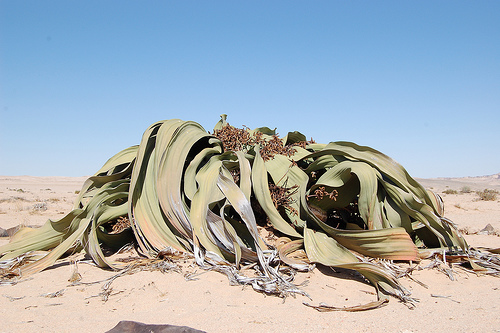
Most visitors to the Namib Desert in coastal southwest Africa often pass by the tree tumbo (Welwitschia mirabilis) without thinking it to be a tree.
Others pass by without even acknowledging it as a lifeform! And no wonder: this low-lying, veggie-heap looks like a cross between something the cat dragged in and something the garbage disposal belched out!
And even though the tree tumbo appears to be refuse that should have been hauled, let us examine this ancient plant a bit more closely (but not too closely!) …
3 AND NOW ANOTHER GHASTLY TREE – THE STRANGLER FIG
Imagine that you’re just standing around, minding your own business - living the life! - when suddenly the strong and unbreakable grasp of a stranger entangles you in its arms…and the miscreant’s long and slithery limbs continue to encompass your entire body up until the point you realize you are being entirely suppressed…and…slowly...strangled… …
http://www.blueplanetbiomes.org/strangler_figs.htm
https://www.britannica.com/plant/strangler-fig-tree
2 JACKAL FOOD

In the dry, coastal thickets of southern Africa, there is a plant so ugly and repulsive the kindest words of endearment the locals can call this thing is ‘jackal food’ (Hydnora Africana).
It lives its life for the most part underground as a parasitic network of stems and roots subsisting off succulent plants of the genus Euphorbia, and it rears its ugly head (technically a flower, believe it or not) when it comes time to pollinate and reproduce.
This plant has scales instead of leaves, it lacks chlorophyll, and its ‘head’ has a very odd resemblance to Pacman on crack. These ‘flowers’ stink unpleasantly like dung, a trait which attracts small beetles to their ‘mouths’, as if their appearance wasn’t bad enough.
This parasitic atrocity is so horrible it makes a Venus flytrap seem like a bouquet of baby’s breath in comparison! …
1 INVASION OF THE…LADYBUGS??
Ladybugs, or ladybirds as they are known in the UK, are probably the cutesiest of all insects.
Even the faintest of heart delight in their fluttery arrival and many people consider them to be good luck.
Now imagine thousands of them bringing good luck right to your front door…and your back door, and your patio, and your rooftop. And, as if eager to bestow even more good tidings, they come into your house through any opening they can possibly find! This happens to homes in eastern states throughout October into November as these little,
unwanted houseguests seek a warm place to hole up for the winter. They seem to pick out individual houses, often completely ignoring neighboring structures, and the crawling, writhing swarm of little red insects can be very distressing to the occupants within. People have had to remove them from their homes with shovels!
